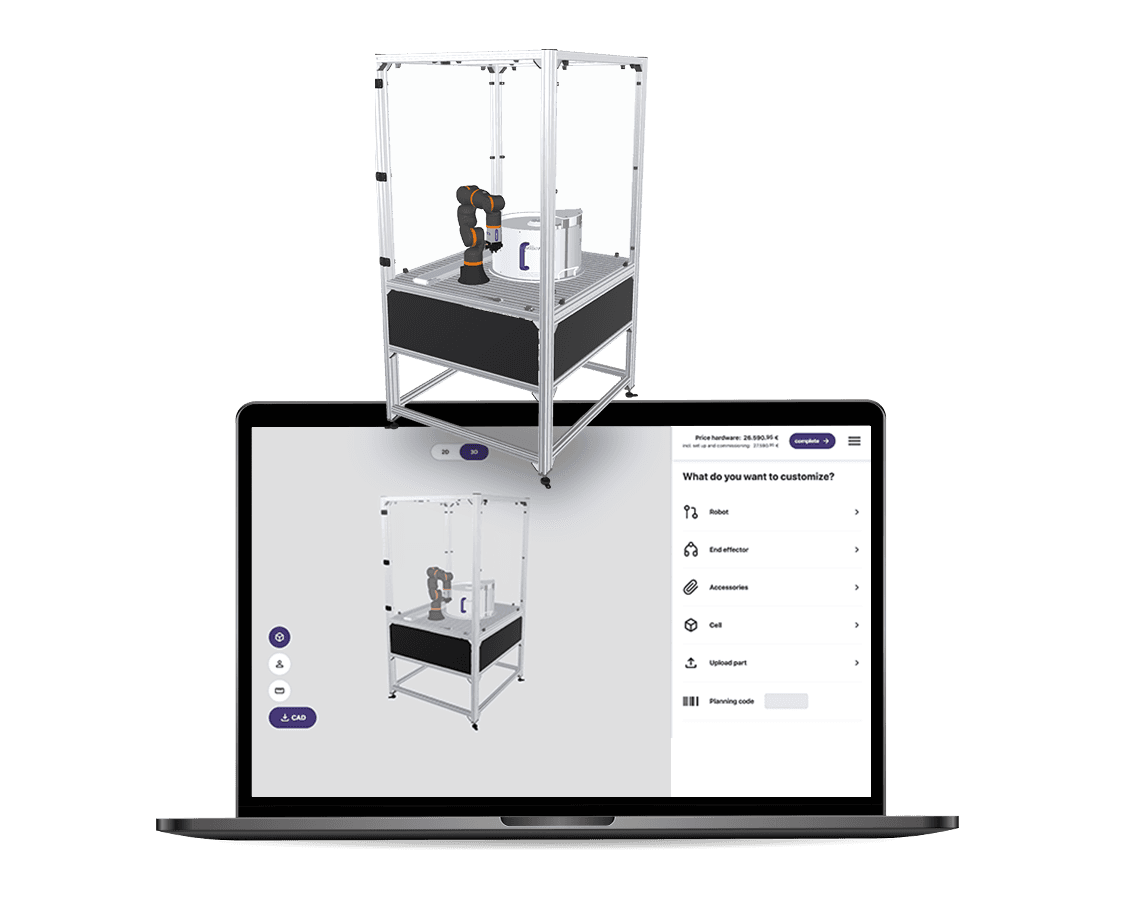
Unitree G1 EDU | U1-U14 | Humanoid Development Platforms
Unitree G1 Development platforms
The Unitree G1 Edu development platforms, as well as the Professional and Ultimate variants, are humanoid robot systems designed for research, development and application-specific robotics. High- and low-level secondary development, an SDK, AI algorithms and a 100-TOPS expansion dock enable the creation of custom applications. Depending on the base model, 23 or 29 degrees of freedom are available. The Professional and Ultimate variants supplement the platform with pre-configured gripping and hand solutions, some of which feature tactile sensors and wrist-mounted RGB cameras. This makes it possible, in particular, to develop and test gripping, manipulation and AI applications.
CN¥559,590
excl. VAT & shipping (are calculated in the final step)
Non-binding inquiry • No online purchase
- Cell design and component selection
- Programming & safety
- Installation
Still have a technical question?Clarify it for free with an RBTXpert
Highlights
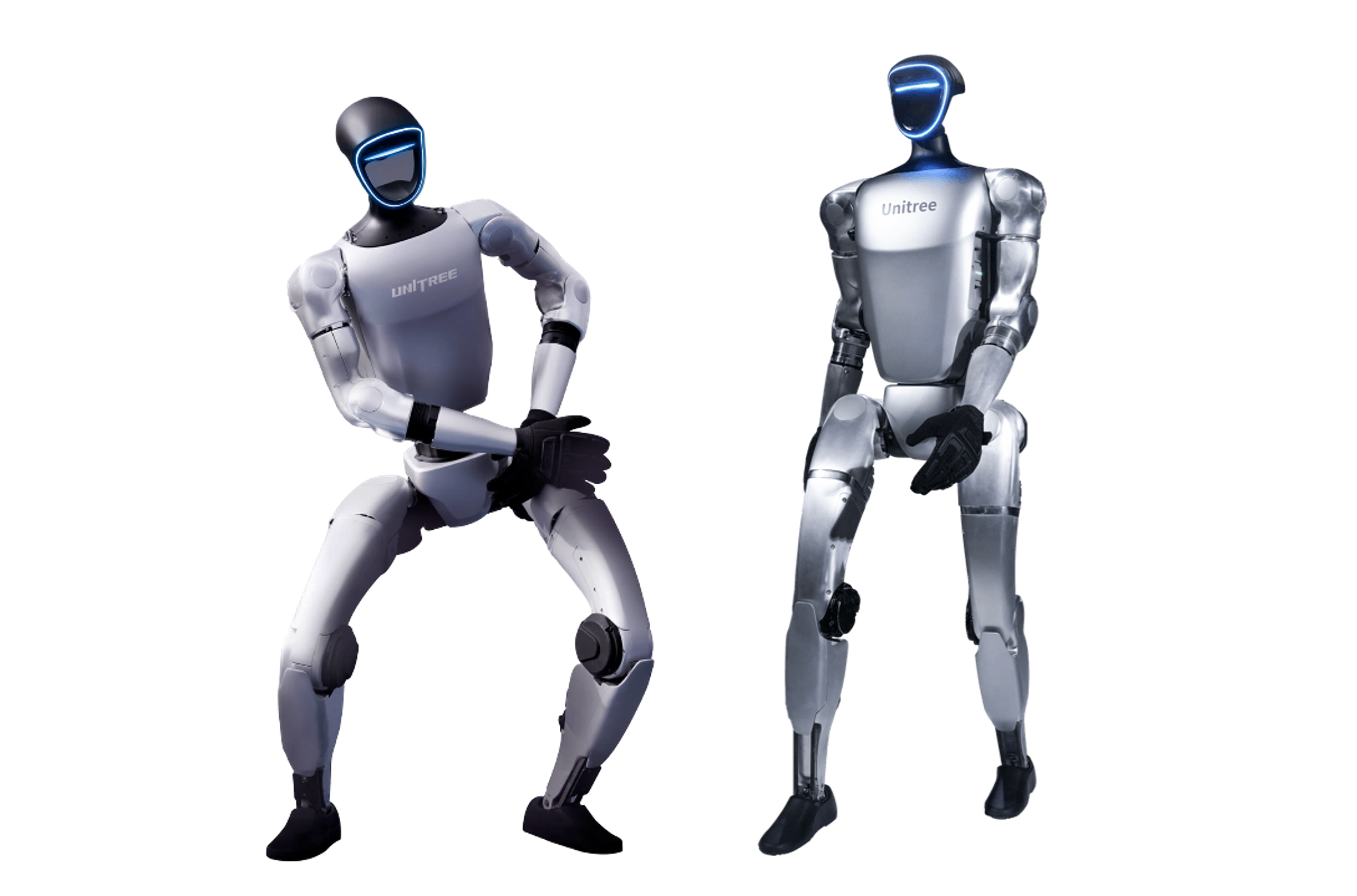
The differences between the development platforms
G1 EDU Standard | 23 DOF | basis of the Professional variants --> Dummy Hand | EDU-U1
G1 EDU Plus | 29 DOF | basis for Ultimate variants --> Dummy Hand | EDU-U2
G1 EDU- Professional (23 DOF Basis)
Professional A → Dex3-1 | 3 Finger | EDU-U9
Professional B → Dex3-1 | 3 Finger with tactile sensors | EDU-U10
Professional E → BrainCo Revo 2 Basic | 5 Finger | EDU-11
Professional F → BrainCo Revo 2 Touch | 5 Finger with tactile sensors | EDU-12
Professional G → Dex2/5 | 5 Finger | EDU-14
Professional H → Dex1-1 Gripper Plus
Professional I → Wuji Hand 2 | 5 Finger
G1 EDU- Ultimate (29 DOF Basis)
Ultimate A → Dex3-1 | 3 Finger | EDU-U3
Ultimate B → Dex3-1 | 3 Finger with tactile sensors | EDU-U4
Ultimate C → Inspire DFQ | 5 Finger | EDU-U5
Ultimate D → Inspire E2 | 5 Finger | with tactile sensors | EDU-U6
Ultimate E → BrainCo Revo 2 Basic | 5 Finger | EDU-U7
Ultimate F → BrainCo Revo 2 Touch | 5 Finger with tactile sensors | EDU-U8
Ultimate G → Dex2/5 | 5 Finger | EDU-13
Ultimate H → Dex1-1 Gripper Plus
Ultimate I → Wuji Hand 2 | 5 Finger
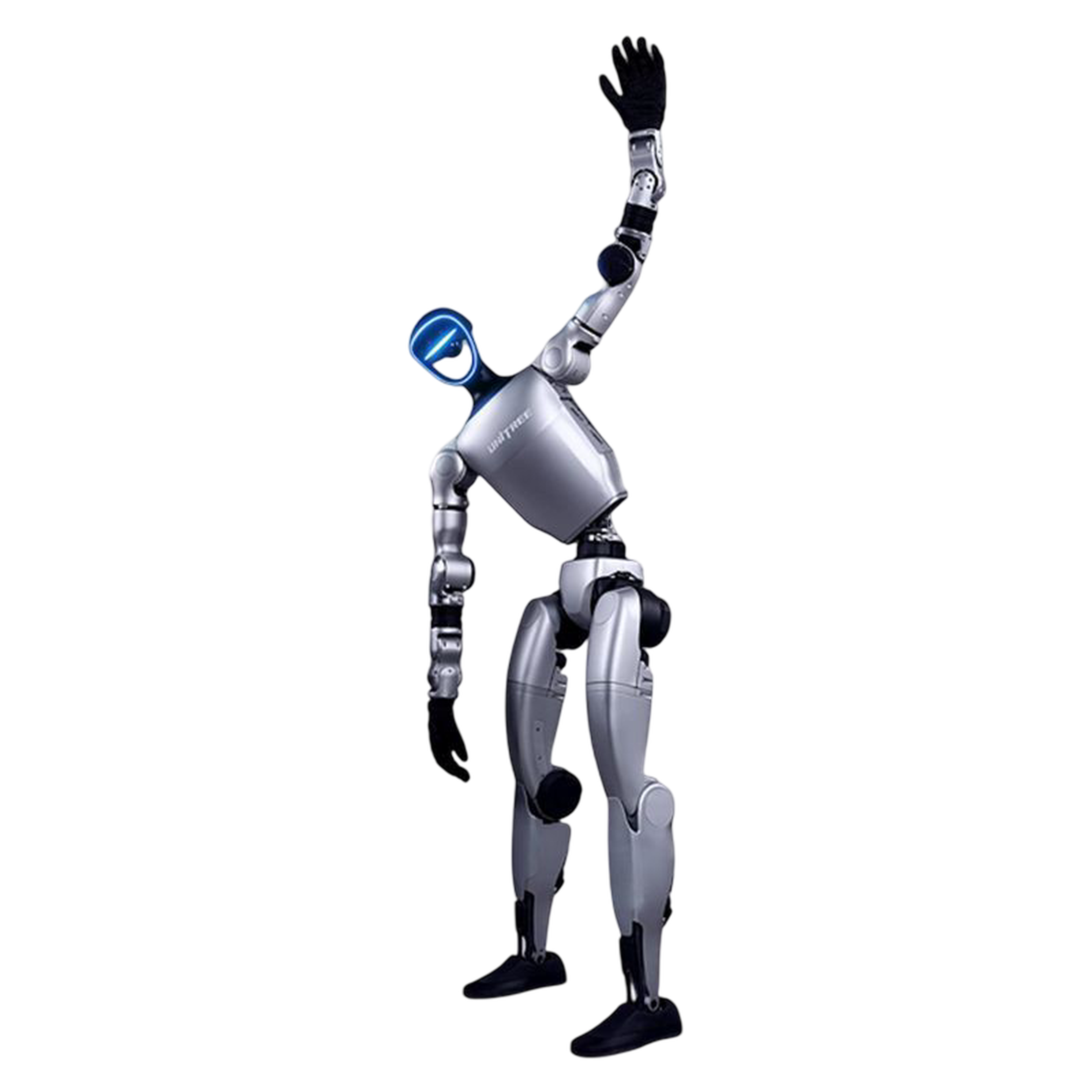
Humanoid Development Platform Unitree G1 EDU U6
The Unitree G1 EDU U6 is a 1,270 mm tall humanoid development platform for research, education, and advanced robotics projects. Weighing around 35 kg, the robot is suitable for laboratory and demonstration setups. The replaceable 13S smart battery provides approximately two hours of operation, depending on motion and computing load. A depth camera and 3D LiDAR provide environmental data for perception, navigation, and autonomous experiments. Dual encoders at the joints, internal cable routing, and local air cooling support repeatable motion. Knee joints with up to 120 Nm of torque and an arm payload of up to 3 kg provide the foundation for dynamic motion sequences, grasping experiments, and mobile manipulation. The payload and motion profile must be adapted to the experimental setup.
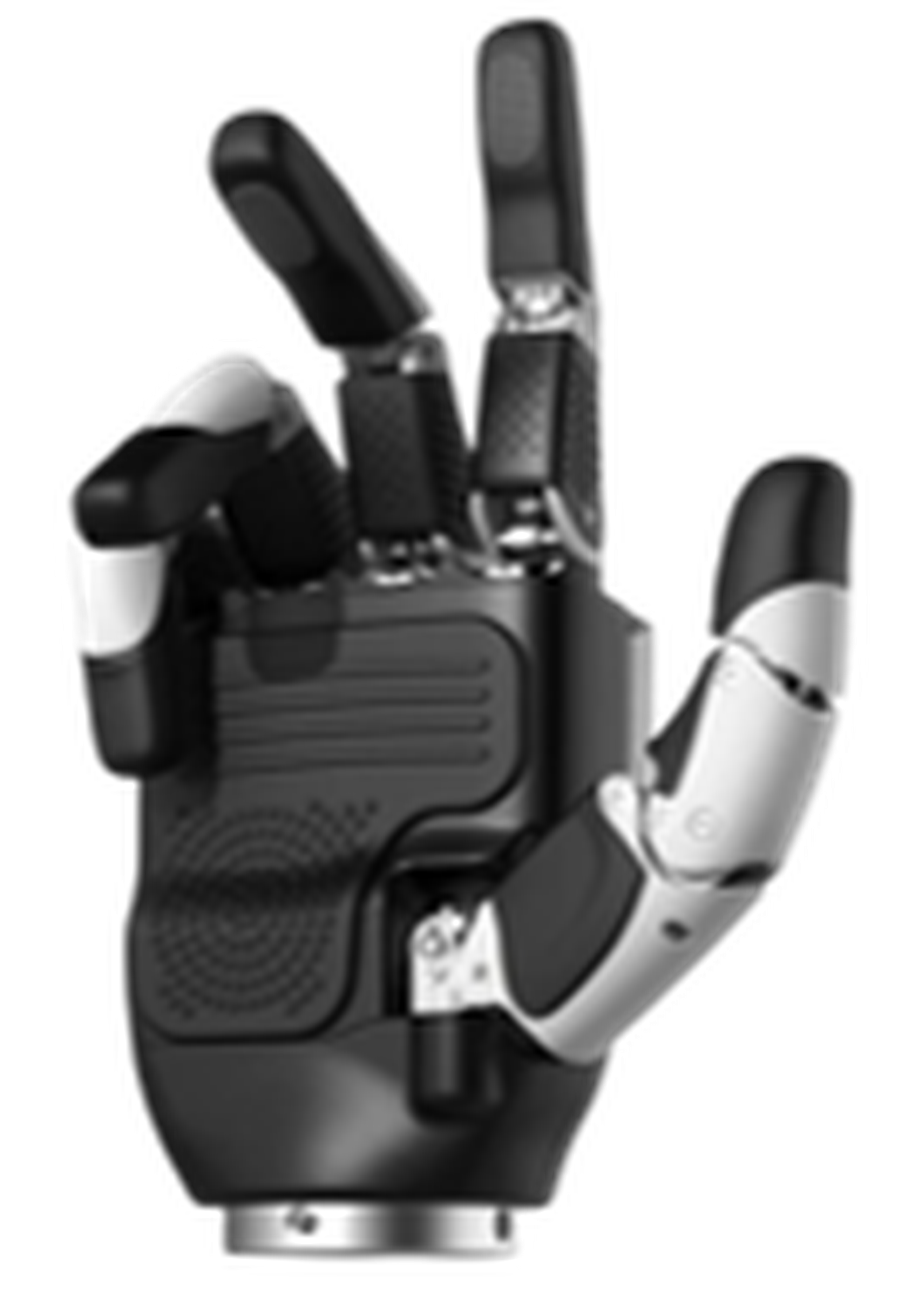
Inspire E2 Five-Finger Hands on the Unitree G1 EDU U6
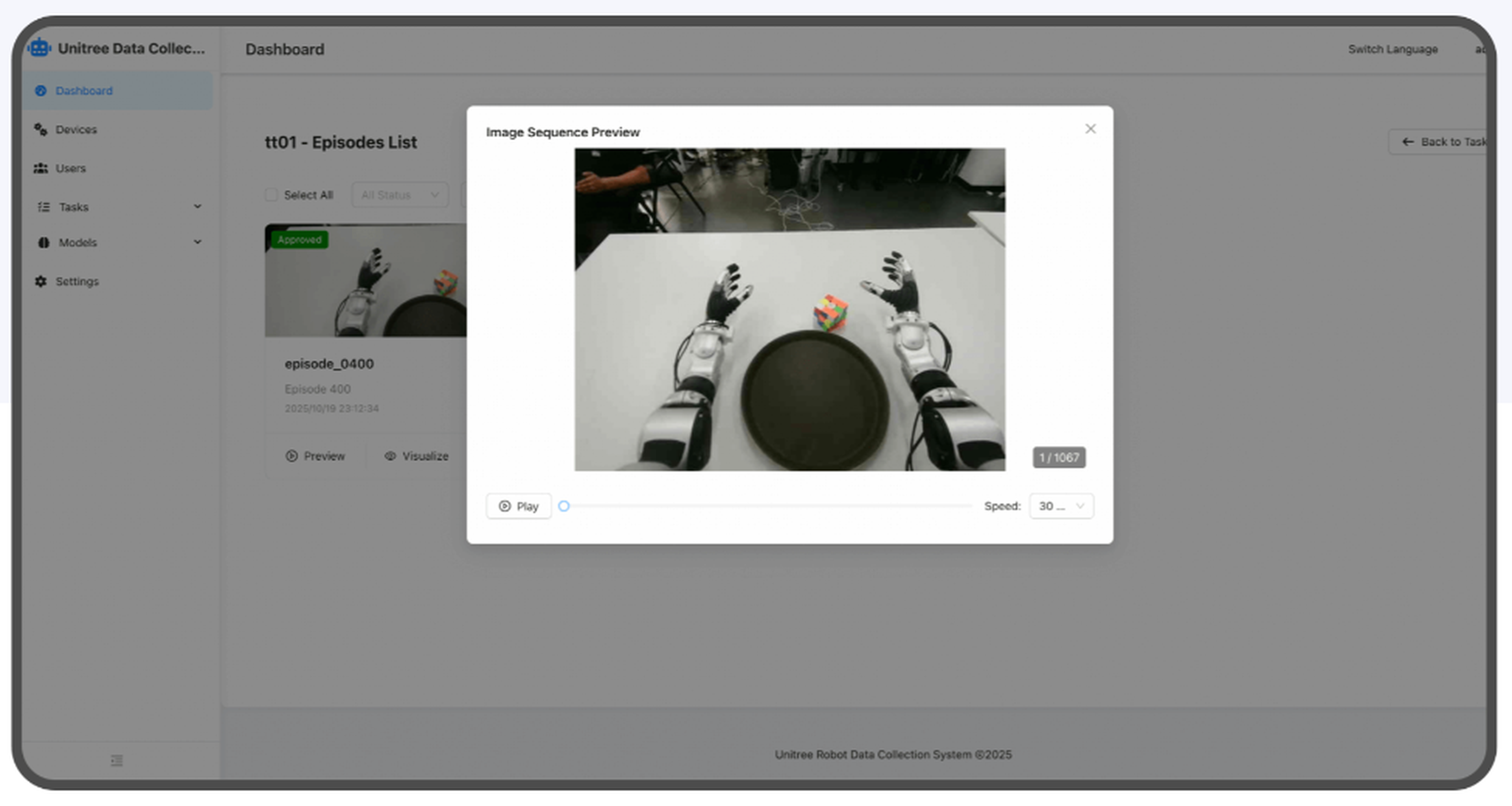
The G1 EDU U6 is configured with Inspire E2 five-finger hands with integrated tactile sensing. Each hand features six active degrees of freedom and twelve joints. The five fingers enable a wide range of grasping patterns and are suitable for experiments with objects of different shapes. Each hand is equipped with seventeen tactile sensors, providing force measurement in a range of 0–30 N with an accuracy of ≤ 5% FS. Repeatability is ±0.20 mm; gripping force is up to 30 N at the thumb and up to 28 N in four-finger grasp configurations. The hands can complete a full closing motion in 0.8 s, enabling fast opening and closing movements. Wrist-mounted RGB cameras provide image data for object detection, grasp point detection, and vision-guided manipulation. The integrated tactile sensors provide feedback on contact conditions and gripping forces, supporting force-controlled manipulation and adaptive grasping strategies during operation.
Control and Programming the G1 EDU platform
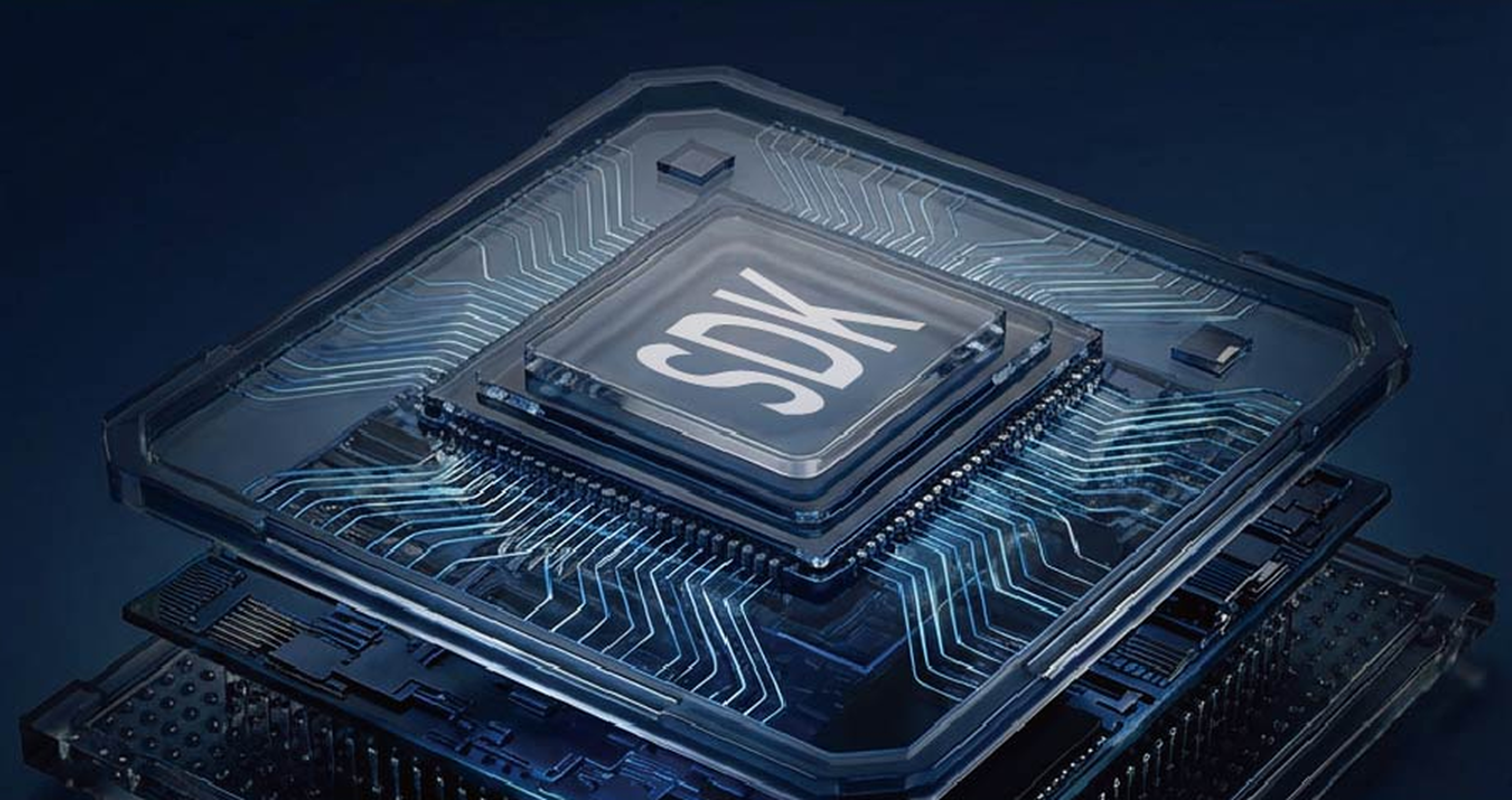
The G1 EDU platform provides high-level and low-level interfaces for custom applications. Developers can implement motion sequences, joint-level control tasks, and manipulation processes. The integrated expansion dock with up to 100 TOPS is suitable for AI algorithms, machine vision, navigation, and positioning. Wi-Fi 6 and Bluetooth 5.2 facilitate integration into laboratory environments, while Smart OTA supports system updates. When programming the Inspire DFQ hands, finger positions and wrist camera data can be integrated into object planning. This enables vision-guided grasping sequences for objects of different shapes. Control cycles, force limits, collision zones, and abort conditions must be defined for the specific project and tested before operation.
Secondary Development and Applications
The open EDU version supports secondary development and is suitable for projects that go beyond predefined motions. Typical areas include humanoid locomotion, balance control, AI-based perception, navigation, human-robot interaction, and manipulation. Universities can use the robot for computer science, mechatronics, control engineering, and machine learning. Companies can conduct feasibility studies for inspection, teleoperation, service tasks, or handling lightweight objects. Hands and grippers available depending on the specific variant further expand the range of experimental applications. Since the G1 is classified as a research and educational platform or partly completed machinery, a risk assessment, safety concept, and application-specific integration are required.
Training, Accessories, and Integration provided by RBTX
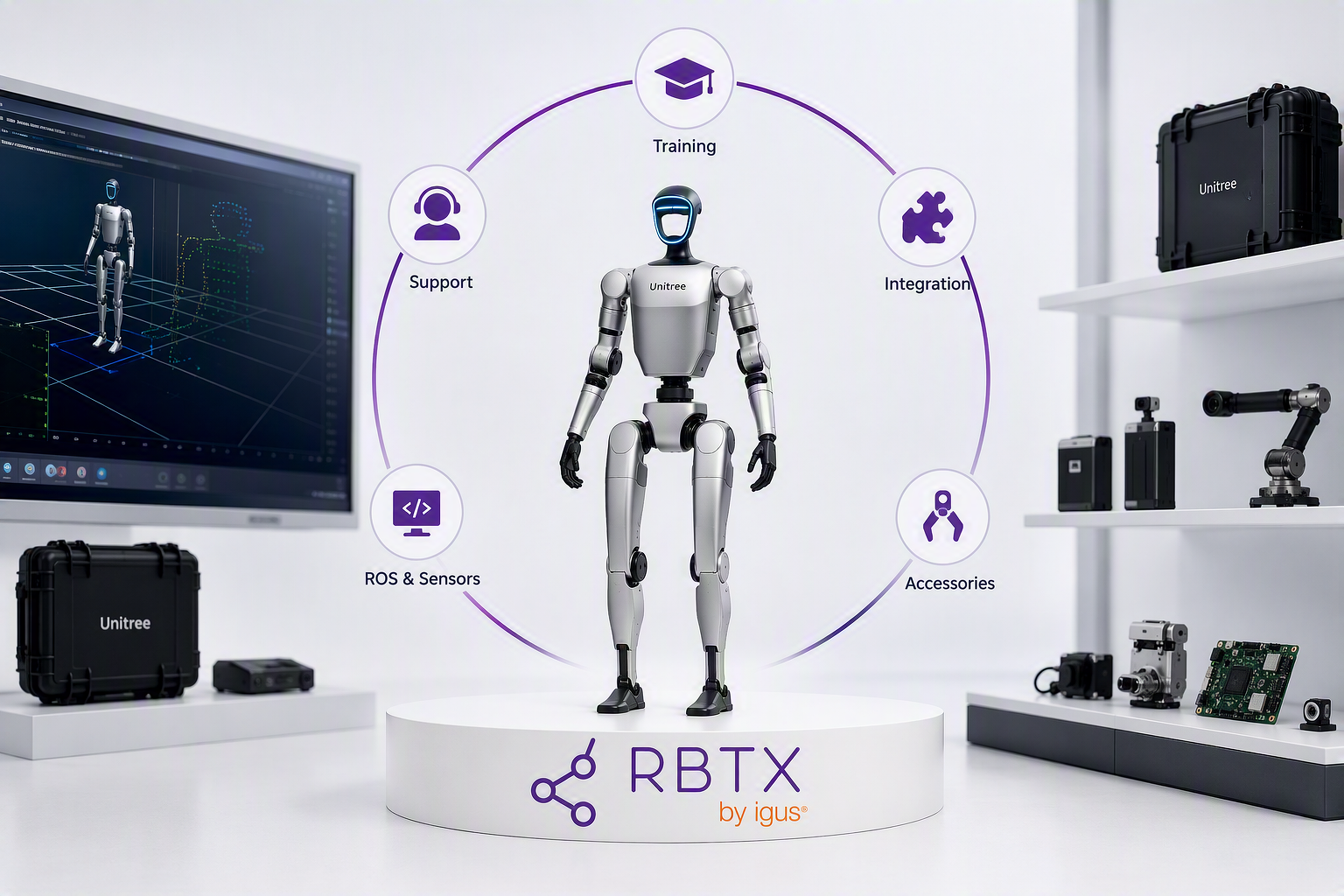
RBTX supports users in selecting the Unitree G1 EDU U6 and setting up a complete, functional robotics system. This includes training for operation, commissioning, and programming, as well as selecting accessories, end effectors, sensors, and safety components. For development projects, RBTX can support the coordination of the robot, software, network, computing hardware, and experimental setup. Integration focuses on interface validation, defining system functions, and involving suitable integration partners. This helps determine at an early stage which components are required for a demonstrator, research project, or proof of concept. Safety requirements, responsibilities, and acceptance criteria are considered from the outset based on the intended application.